Your hearing is one of your most vital connections to the world around you. At Sophisticated Hearing, we understand that maintaining this connection requires more than just reacting to significant changes; it requires a proactive approach to your long-term wellness.
While it is common to prioritize vision exams or dental checkups, hearing health often falls to the bottom of the priority list. However, delaying a professional evaluation carries costs that extend far beyond simply missing a few words in a conversation.
By understanding the true impact of untreated hearing loss, you can take informed steps to protect your cognitive health, your physical safety, and your emotional well-being.
The Moments That Slowly Slip Away
Hearing loss rarely happens overnight. Instead, it often develops with such subtlety that you may not notice the gradual erosion of clarity in your daily life.
You might find yourself turning up the volume on the television or noticing that people seem to be mumbling more than they used to. These small adjustments are often the first signs that your auditory system is struggling to capture the full spectrum of sound.
You deserve to experience the richness of every interaction without the frustration of missing key details. When hearing begins to fade, you lose the delicate nuances of a grandchild’s laughter or the quiet wit of a colleague’s remark.
Over time, you may find yourself feeling less confident in social settings, perhaps choosing to stay silent rather than risk responding incorrectly to a question you did not fully hear. This hesitation can change how you view yourself and how you interact with your loved ones.
Recognizing these subtle shifts early allows you to address them before they begin to diminish your confidence or your quality of life.
When Your Brain Has to Work Overtime
The process of hearing is as much a cognitive function as it is an auditory one. When your ears cannot provide a clear signal, your brain must compensate by working significantly harder to decode and fill in the missing pieces of information.
You might notice that after a long dinner or a meeting, you feel an unusual sense of exhaustion. This is often referred to as listening fatigue, a state where the mental energy required to follow speech leaves you drained.
You benefit from an efficient auditory system that allows your brain to focus on the meaning of a conversation rather than the mechanics of hearing. When your brain is constantly "overclocked" to interpret muffled sounds, it redirects resources away from other important functions like memory and multitasking.
By prioritizing a professional evaluation, you can rest assured that you are giving your brain the support it needs to process sound naturally and effortlessly. Addressing hearing concerns early helps preserve your mental energy so you can spend it on what truly matters.
Hearing Loss, Social Isolation, and Cognitive Health
The impact of untreated hearing loss often ripples out into your social life and overall brain health. As conversations become more difficult to follow, you might find yourself withdrawing from the activities you once enjoyed.
Research, including studies from Johns Hopkins Medicine, has highlighted a significant correlation between hearing loss and an increased risk of social isolation. When you pull back from social engagement, your brain receives less stimulation, which can have long-term consequences for your cognitive vitality.
You can take comfort in knowing that staying socially active is one of the best ways to keep your mind sharp. Evidence suggests that untreated hearing loss is linked to a higher risk of developing cognitive decline and dementia, largely due to the combination of brain strain and reduced social interaction.
By choosing to seek help, you are not just improving your ability to hear; you are actively investing in your long-term cognitive health. Maintaining clear communication ensures that you remain an active, engaged member of your community, which is essential for your emotional and mental prosperity.
Hearing, Balance, and Everyday Safety
Your ears do more than just process sound; they are integral to your sense of balance and physical orientation.
Your brain relies on subtle environmental cues captured by your hearing to help you navigate your physical surroundings safely. When your hearing is compromised, your brain must dedicate more cognitive resources to interpreting sound, leaving fewer resources available for maintaining steady balance and gait.
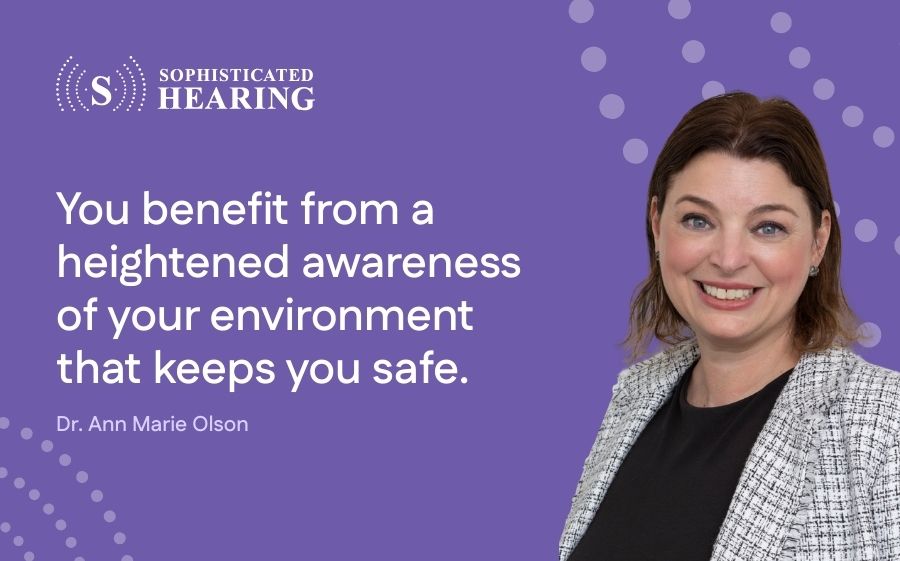
You benefit from a heightened awareness of your environment that keeps you safe during everyday activities. Studies have shown that even a mild degree of untreated hearing loss can increase the risk of accidental falls.
This happens because the brain is forced to multitask between trying to hear and trying to stay upright. By ensuring your hearing is functioning optimally, you support your physical independence and reduce the risk of injury.
Taking care of your hearing is a fundamental part of maintaining your overall physical safety as you move through your home and your community.
Why Proactive Hearing Care Makes a Difference
Taking a proactive stance toward your hearing health is one of the most empowering decisions you can make. A baseline hearing test provides a vital point of reference that allows for the monitoring of changes over time.
At Sophisticated Hearing, we believe in providing a standard of care that looks at the whole person, not just the results on an audiogram. You can trust that our approach is rooted in thorough and personalized evaluations of your hearing that ensure we understand the unique nuances of your hearing profile.
You gain access to a dedicated team of professionals who are committed to your long-term success. We pride ourselves on our dedicated support tailored to your lifestyle, which allows us to offer you the best solutions from all leading global brands without bias.
Our goal is to create a personalized plan that fits your lifestyle and your specific needs. When you choose to partner with us, you are entering into a long-term relationship focused on preserving your quality of life. You can feel confident knowing that our experienced team, who will be by your side, is here to guide you through every step of your journey toward better hearing.
Protect Your Hearing, Your Brain, and Your Life
Addressing your hearing health is a sign of strength and a commitment to your future self. You can rest assured that an initial assessment is a collaborative process designed to give you clarity and peace of mind. Early testing does not always mean you will require immediate treatment; often, it is about establishing a healthy habit of monitoring and prevention.
When you are ready to take the next step, our team at Sophisticated Hearing is here to provide the thoughtful, evidence-informed care you deserve. We invite you to experience our patient-centered philosophy and values firsthand.
By prioritizing your hearing today, you are protecting your brain, your safety, and your ability to remain fully present in every moment of your life. You deserve the peace of mind that comes with professional hearing care.
We encourage you to contact us today to begin your journey toward lasting hearing health.
Frequently Asked Questions
If I can still hear most things, why do I need a hearing test right now?
You benefit from early detection because hearing loss often affects specific frequencies before it impacts your overall volume.
Even if you feel you are hearing "well enough," your brain may already be working significantly harder to fill in gaps in speech, leading to mental fatigue. A baseline test allows us to identify these subtle changes early, preventing the cognitive strain that occurs when hearing loss goes unaddressed for years.
How does untreated hearing loss actually lead to an increased risk of dementia?
The link between hearing loss and cognitive decline is multifaceted, involving both brain strain and social withdrawal. When your brain constantly struggles to decode muffled sounds, it leaves less "cognitive reserve" for memory and thinking tasks.
Additionally, if you begin to avoid social situations because hearing is difficult, the resulting lack of mental stimulation can accelerate cognitive aging. Addressing hearing loss helps maintain the neural pathways necessary for healthy brain function.
Is it true that my hearing affects how likely I am to trip or fall?
Yes, your auditory system provides essential spatial cues that your brain uses to maintain balance. If your hearing is impaired, your brain must use more mental energy to process sound, which can distract from the task of monitoring your physical balance.
By ensuring you can hear the subtle sounds of your environment, you allow your brain to better coordinate your movements, significantly supporting your physical safety and independence.
Sources
A world-renowned medical research institution providing detailed insights into the critical links between hearing health, cognitive decline, and physical safety.

Search
Request a Callback