May is the one month of the year when audiologists and hearing health professionals collectively ask our communities to pause and think about a vital, yet often overlooked, part of their wellness: their hearing.
Created by the American Speech-Language-Hearing Association (ASHA) in 1927, Better Hearing Month is more than just a public health campaign but an invitation to stop putting off the conversation you know you need to have.
When it comes to our overall health, we’re quick to book annual eye exams and routine dental cleanings. Yet, hearing health frequently sits at the bottom of the priority list. Many individuals wait seven to ten years after first noticing changes in their hearing before seeking professional guidance.
A decade is a long time to miss out on the subtleties of daily conversation, the laughter of loved ones, and the simple comfort of feeling entirely connected to the world around you.
At Sophisticated Hearing, our mission is to change that narrative.
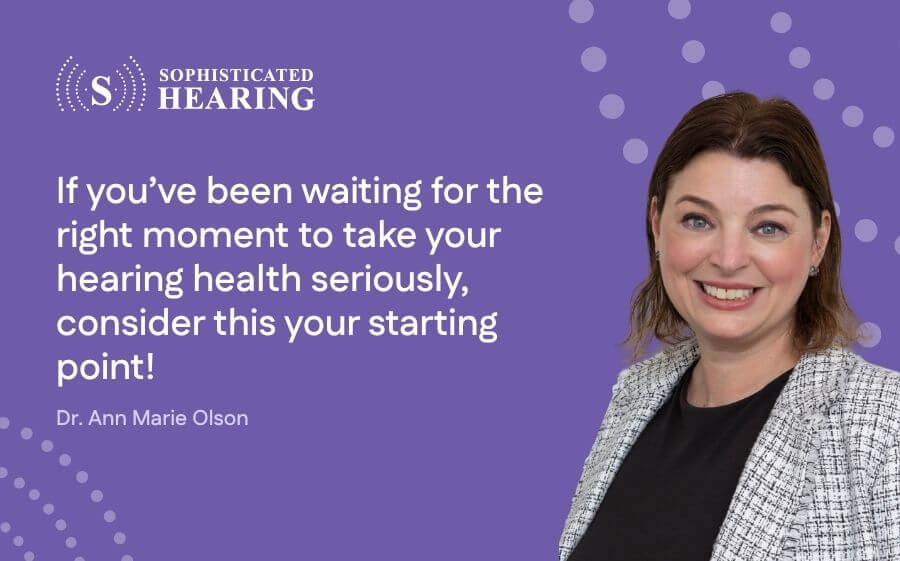
You deserve to live with clarity, confidence, and ease. If you’ve been waiting for the right moment to take your hearing health seriously, consider this your starting point!
Hearing Doesn't Just “Go”: Here's What's Actually Happening
When people think about changes in their hearing, they often picture the world simply getting quieter. They imagine turning up the volume on the television or asking people to shout. The reality of hearing wellness, however, is much more nuanced.
It is rarely a matter of volume; it is almost always a matter of clarity.
Presbycusis: Naming and Normalizing
The most common type of age-related hearing change is called presbycusis, which affects one in three adults over the age of 65. It is the single most common hearing condition in the world.
Presbycusis is a gradual, natural change that occurs in the inner ear over time. When it begins, the high-frequency hair cells in the cochlea are the first to experience wear and tear.
Because high frequencies control our ability to understand consonants, such as "s," "sh," "f," and "t," voices do not necessarily sound quieter; instead, they begin to sound muffled.
To learn more about the early signs of age-related changes, read our guide on Embracing Clarity: A Guide to Age-Related Hearing Loss.
Because this change happens so slowly, it’s very easy to explain away. You might find yourself thinking that everyone mumbles these days or that restaurants have simply become louder.
However, there is often a compounding factor: noise exposure. Noise-induced hearing loss from everyday activities (like using power tools, attending loud events, or listening to personal audio devices) can accelerate the natural aging process of your hearing.
The Brain Connection
When your ears receive less auditory input, your brain has to work significantly harder to fill in the missing gaps in conversation. This phenomenon is known as listening fatigue, where your mind expends tremendous energy just to process background noise and infer what people are saying.
This extra effort can lead to deep mental exhaustion, and research from institutions like Johns Hopkins University links untreated hearing changes to an increased risk of cognitive decline and brain atrophy.
When you protect your hearing, you are protecting your cognitive wellness long-term.
To read the full evidence base on how hearing impacts mental clarity, explore our article on The Real Cost of Skipping Hearing Tests.
What Skipping a Hearing Test Actually Costs You
When we discuss the "cost" of hearing care, it is easy to default to finances. But the true cost of waiting is not about money. The real cost is what slowly disappears while you wait to act.
Social Fatigue and Relationships
Over the years, the subtle struggle to follow conversations can shift your behavior without you even realizing it. You might stop going to busy restaurants or family gatherings because they are too exhausting to navigate.
After an hour or two of intense concentration to understand speech in a loud room, your brain is simply drained.
The Emotional Impact
People with untreated hearing changes often worry about appearing confused or disengaged, or they fear they are missing punchlines in casual conversation. It takes incredible energy to mask these challenges, and the emotional toll can be heavy.
In my practice, almost every patient who finally takes the step to get an assessment tells me the exact same thing: "I wish I had come in years ago."
It's Not Just an “Older Adult” Conversation
Hearing wellness is not an issue restricted to older age. In our connected world, individuals of all ages, including children, face significant risks from everyday noise exposure. Earbuds, high-volume personal audio, concerts, and sporting events can all contribute to noise-induced hearing loss.
Recognizing the Signs in Younger Family Members
Parents often assume that children are too young to experience hearing changes. However, noise-induced hearing loss can happen at any age and is completely irreversible.
Common signs parents might miss or explain away include:
Frequently asking for clarification or saying "What?"
Struggling to follow conversations when the room is noisy.
Withdrawing from group environments or showing signs of school-related fatigue.
Simple Protective Habits
You can protect your family's hearing wellness by introducing a few straightforward habits:
Enforce sensible volume limits on devices and headphones.
Provide ear protection for children at loud community events or sports games.
Include hearing wellness checks in your family's annual routine.
Learn more about keeping your children's hearing safe: read our complete guide on Noise-Induced Hearing Loss in Children.
Getting the Most from Your Hearing Aids, Every Single Day
Better Hearing Month is not solely for individuals exploring hearing care for the first time. It is also an opportunity to support current wearers.
Many people have hearing aids but do not wear them consistently, or they skip the regular maintenance required to keep them performing at their best.
The Case for All-Day Wear
Hearing aids are precision tools designed to provide constant auditory stimulation. When you wear them all day, even at home alone, you keep your brain's auditory pathways active and healthy.
Inconsistent use slows down your brain's ability to adjust to amplified sound. Making the commitment to wear your devices daily maximizes the investment you have already made in your quality of life.
Three Quick Fixes for Peak Performance
If you feel your hearing aids are not working as well as they used to, try checking these three quick elements:
Daily Cleaning: Ensure that no earwax or moisture is caught in the microphone ports or tubing.
Replace Consumables: Change out domes and wax guards regularly to maintain clear sound transmission.
Review Program Settings: Check whether the settings match your current listening environments.
Remember that coming in for a performance review is not a sign of failure but simply smart maintenance. We are always here to help you fine-tune your devices.
Curious about the benefits of wearing your devices regularly? Check out The Importance of Wearing Hearing Aids All Day, Every Day.
What Changed When Donna Stopped Waiting
Looking for a real-life example of how hearing healthcare can change your worldview?
Donna’s journey shows how quickly clarity and confidence can return when you address your hearing concerns proactively.
Like many people, Donna noticed that she was struggling to follow conversations in the car and was missing key parts of family discussions.
She remembered her mother choosing to live with untreated hearing loss for decades, an experience that left her mother isolated and withdrawn. Donna realized she did not want to follow that path.
"I didn't realize how much energy I was wasting until I took action," Donna shared. "Once I sat down with Dr. Olson and understood what was happening, the decision was simple. The difference in my confidence and my ability to be present with my family is night and day."
Donna took immediate steps: she scheduled an appointment, had a comprehensive test, and began wearing modern hearing aids. She didn't wait for the problem to grow worse; she took control of her own wellness.
To read Donna's full story, visit How Modern Hearing Aids Helped Improve Everyday Conversations: Donna's Story.
The Invitation: Book with Sophisticated Hearing Today!
May is Better Hearing Month, which means right now is exactly the right time to find out where your hearing stands. A comprehensive hearing assessment takes about an hour, tells you everything you need to know, and costs you nothing in terms of commitment.
We are currently accepting new patients. The only question is whether you will let this month be the one that changes things.
Get in touch with our team today to start your hearing health journey.

Search
Request a Callback